

Gastronomy and Landscape Cuisine
To visit Asturias is to immerse yourself in an incomparable gastronomic experience. It is to savour traditional beverages, to delight in high-level cuisine and to discover a culinary heritage that is, without a doubt, one of its greatest attractions.
To enjoy its rich gastronomic tradition even more, there is nothing better than exploring the history and production process of its most emblematic products with guided tours and tastings to find out what lies behind each dish. A tradition based on quality raw materials and which was already promoting a sustainable model long before the concepts of slow food or zero kilometre became part of the collective consciousness.
Here are some unique experiences that will allow you to get to know the essence of its Landscape Cuisine, where each mouthful tells the story and the soul of this region.
The land of 50 cheeses
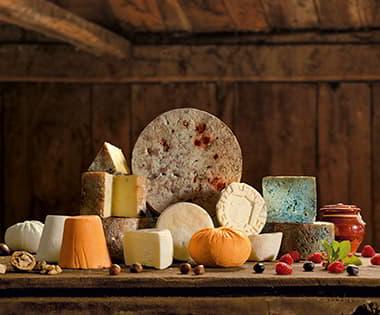
Did you know that Asturias is home to the highest concentration of cheese production in Europe in proportion to its territory?
With more than 50 varieties of cheese - which amounts to more than 300 if you count the different variants - this region is a true paradise for cheese lovers. Each one of them is a little gem that reflects the rich gastronomic legacy of Asturias, and tasting them is a unique way of delving into the culinary traditions of its counties and towns.
Visiting a cheese dairy in Asturias is not only a gastronomic experience, but also a journey to the deepest roots of Asturian culture. There, history, landscape and customs merge in every mouthful, awakening all the senses. If you're looking to add a delicious touch to your incentive trip, don't hesitate to visit one of the region's numerous cheese dairies, where you can enjoy unique and authentic tastings.



 Read more

Cider culture, Intangible Cultural Heritage of Humanity by Unesco
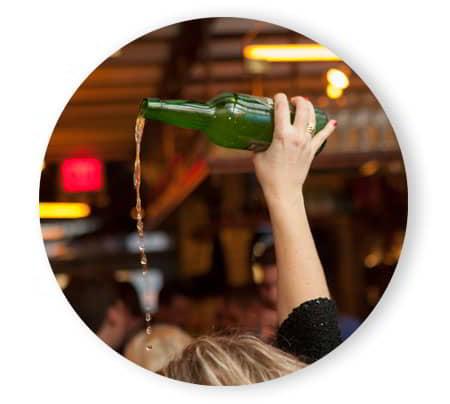
Learn the art of pouring cider, get a close look at the cider-making process and, to top it all off, enjoy a delicious culín!
Visits to the llagares, the authentic production centres of this emblematic drink, take you back to its origins and reveal why cider culture has been declared Intangible Cultural Heritage of Humanity by Unesco and how cider is so deeply rooted in the customs and traditions of Asturias. Visitors will be able to discover the singularities of this drink, taste it in an authentic espicha and take part in cider-pouring competitions. They can also delve into the history of cider by visiting the Cider Museum, where they can learn about traditional cider production techniques. An original and fun way to close any corporate event, with a unique touch of Asturian gastronomic culture.
Read more
Asturias is also a land of wines
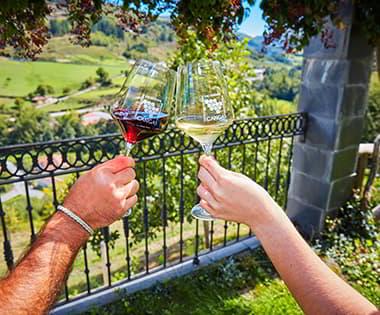
In the south-west of Asturias, under the Vino de Cangas seal, a rich oenological tradition is hidden that invites you to live a unique immersive experience.
The region's wineries, many of them small and artisanal, offer the perfect setting to complement a corporate event with an exclusive and authentic touch.
The experience can be extended with a visit to the Wine Museum and the Cangas PDO wine cellars, where you will discover the secrets of vine cultivation and the production of this unique beverage. To round off, walk along the Paseo del Vino, a charming pedestrian path that connects two historic wine-growing areas: San Tisu and Las Barzanieḷḷas, offering dreamy landscapes and the essence of Asturian wine at every step.
Read more
Adventures in Paradise
Stop, take a break and enjoy the surroundings. Asturias is a pioneering region in active and sports tourism. Some of these activities seek a connection with nature through unrepeatable moments. And, what's more, all in the best possible setting, as the region boasts spectacular natural areas and the best-preserved coastline in the country.
With a wide range of options, incentive trips become unforgettable experiences, both for large work groups and smaller teams: a descent down its numerous rivers, a route along the coast where you can discover dinosaur ichnites, tourist activities that revive ancient traditions or cycle-touring routes to explore the most beautiful corners of its geography.
These are just some of the adventures we suggest for you to enjoy this authentic natural paradise.
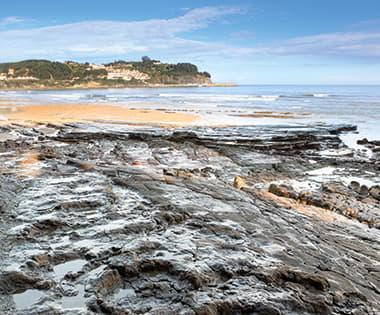
The coast of the Dinosaurs and the river Sella
Along the Asturian coast, specifically between Gijón/Xixón and Ribadesella/Ribeseya, lies the so-called Dinosaur Coast, where you can find fossil footprints of these prehistoric animals that inhabited Asturias millions of years ago.
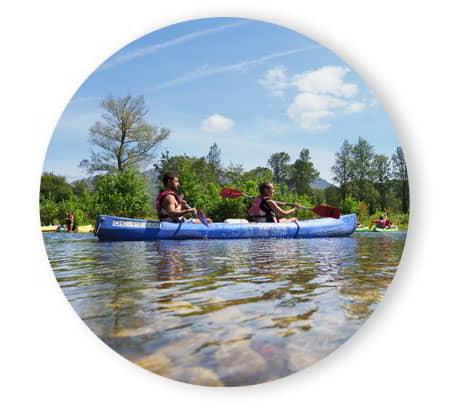
Furthermore, in Colunga you can visit the Jurassic Museum of Asturias, MUJA, with a very didactic and entertaining content both inside and outside. This journey can culminate with one of the most unique active tourism activities in eastern Asturias: canoeing down the river Sella - between Arriondas and Ribadesella - an option to involve your team in a fascinating sporting activity in the vicinity of the Picos de Europa.
Read more
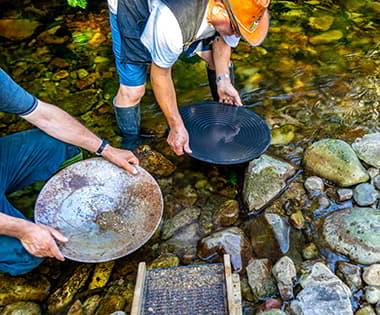
In search of gold
In the Navelgas river, in western Asturias, there is a tradition that is still very present today: gold panning. This ancient technique, which has now become a tourist and sporting activity, is used to extract gold nuggets, taking advantage of the good conditions of the rivers in the Valle de oro to search for this precious metal.
In addition, the experience can be completed with a visit to the Gold Museum, where you will learn about ancient stories, legends, technological advances, engineering, rites, symbols, etc., all from the hand of the Asturians and Romans.
Read more
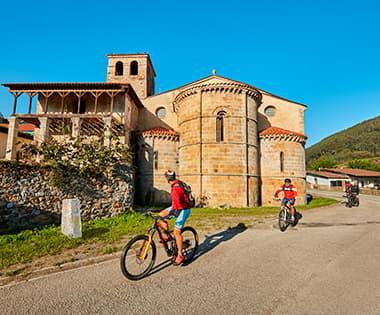
The Way of Saint James
The Way of St. James has crossed the frontiers of the spiritual and religious to become a major tourist destination.
There are several Jacobean routes that run through Asturias: the Primitive Way -the first Way of St. James in history and the origin of all the others-, the Coastal Way (or Northern Way) and also the Way of El Salvador, which links León with Oviedo/Uviéu. Depending on the route chosen, the route takes you through monasteries, forests, medieval bridges, villages, beaches and cliffs to discover Asturias on foot. For those who do not have time to do the route in one go, walking it in sections is an increasingly common option among pilgrims. What if you turn your incentive trip into a stage of the Camino de Santiago?
Read more
En_Clave de Sostenibilidad: Following in the footsteps of the brown bear and the Bearded and Bearded Vulture
There are activities that reconnect with nature and encourage people to connect with each other. And only in a natural environment like the ones you can find in Asturias can you create that connection and bring out the best in each of the members of a team.
Because sustainable tourism is much more than just a growing trend, it is a way of enjoying the environment without altering it, thus contributing to local development and the protection of flora and fauna.
Would you like to take your team on a wildlife-spotting trip? How about visiting one of its Biosphere Reserves or taking a look at one of its impressive viewpoints scattered all over the country? Take note of these suggestions so that your team will never forget their trip to Asturias.

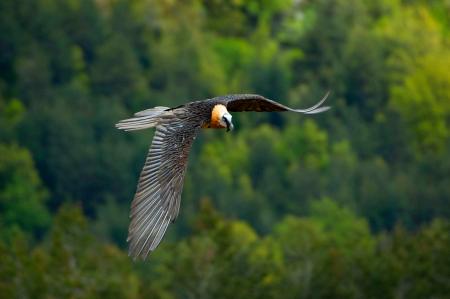
Sighting of bears and bearded vultures
There are experiences that remain etched in the retina and the sighting of brown bears in their natural habitat is undoubtedly one of them.
For this reason, organisations and companies working to protect this species design immersive activities to follow their trail. The Brown Bear Foundation runs bear-viewing routes in the Somiedo Natural Park and in the Fuentes del Narcea, Degaña and Ibias Natural Park. The Asturias Bear Foundation also runs these routes, with an itinerary in the Ubiñas-La Mesa Nature Reserve, which ends with a visit to the Casa del Oso interpretation centre. Another option for this nature trip is offered by the Bearded Vulture Conservation Foundation, with a mountain adventure in a 4x4 vehicle to see and raise awareness of the survival of this bird. These activities form part of the Asturias in the key of sustainability programme, a pioneering MICE and CSR tourism project that offers sustainable activities for companies and congresses. There are many options for enjoying ecotourism in Asturias.
Read more
In the woods
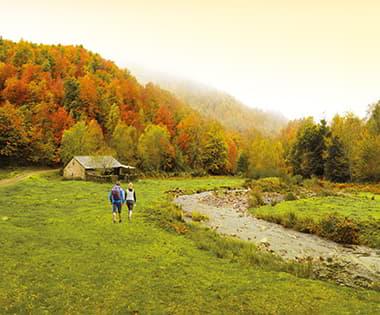
The great variety of forests in Asturias is one of its great charms.
When we think of the natural paradise, we think of its oak and beech trees, its holm oak and cork oak forests or species that are home to legends such as the yew or holly. Among so many options, we suggest you take a route through some of these spaces, the largest and best conserved in Europe, such as the Muniellos Forest -which conserves its charm thanks to the fact that only 20 privileged visitors a day can visit it- or the Monasterio de Hermo Beech Forest. Also worthy of special mention are the different forests and trees that have been declared Natural Monuments, such as the Bermiego Yew in Quirós or the Carbayón de Valentín in Tinéu. Get into the heart of nature and walk through its forests and centenary trees!
Read more
Paradise, from the heights
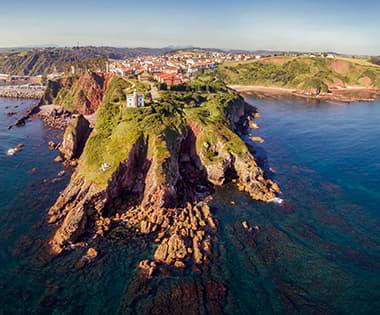
Asturias is a slow travel destination that combines high mountain landscapes and cliffs with views of the Cantabrian Sea, a contrast that has become the hallmark of the region and a favourite destination for nature lovers.
The best way to discover these natural enclaves is from the highest point, at the incredible natural or conditioned viewpoints scattered throughout the region. An ideal option as an incentive trip is to take a camera to immortalise these iconic natural gems of the region: the Naranjo de Bulnes or Picu Urriellu; A Paicega, a viewpoint in Pesoz or Cabu Peñes in Gozón, the most northerly in Asturias. Discover some of the most emblematic viewpoints in Asturias.
Read more
Industrial Tourism: In the bowels of our history
The history of the mine and the way of life of the miners are closely linked to the mining culture and nature of Asturias. And this can be seen not only in many of its mines, now converted into museums of a not so distant history, but also in the cultural resources that show the day-to-day life of the workers in a sector that for decades marked the tradition and customs of several generations.
Just like the blacksmiths, who have left an important legacy in the west of the region, where some artists still work in this traditional way. These vestiges of industry in Asturias, now converted into tourist attractions, represent a series of unique experiences to live in a group. Definitely, a way to live a unique and unforgettable incentive trip.
In the skin of a miner
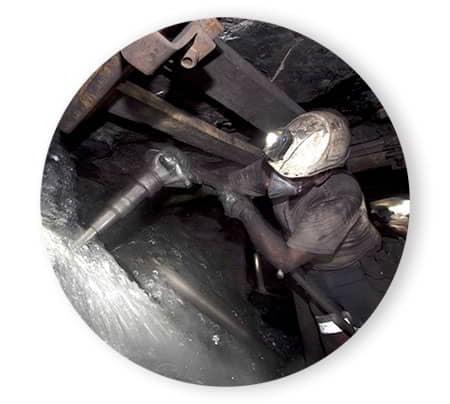
In the emblematic Pozo Sotón, declared an Asset of Cultural Interest, you can go more than 500 metres down to become a miner for a day.
Equipped with a miner's lamp and professional equipment, visitors descend in the cage into the heart of the mine, where the real adventure begins. The tour includes part of the 140 kilometres of galleries, either on foot or aboard the historic train that transported the workers. Do you wonder what a working day in a coal mine was like? What tools did the miners use? This immersive experience will allow you to feel, first-hand, what life was like inside the mine. Find out more about immersive experiences in the Sotón Pit.
Read more
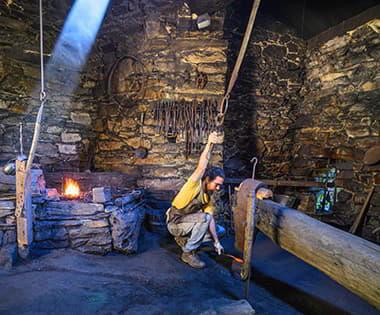
The tradition of the ferreiros
Once upon a time, the profession of blacksmith or ironmonger was common in western Asturias. Although this activity disappeared at the end of the 19th and beginning of the 20th centuries, there are still workshops that keep this tradition alive.
One of them is the Mazo de Mazonovo, in Santa Eulalia de Oscos, a hydraulic mallet and forge workshop from the 18th century where the ironworkers still work with the techniques inherited from their ancestors. In addition, part of its facilities have been converted into a museum that shows the evolution of blacksmithing from its origins to the present day.
Similarly, in Os Teixóis, in Taramundi, there is another ethnographic site that stands out for its perfectly preserved hydraulic devices, such as mallets and mills, which offer a unique insight into forging and other traditional trades. Both places, surrounded by stunning landscapes, are located in the heart of the Oscos-Eo Biosphere Reserve, and are essential destinations for those who wish to discover the legacy of craftsmanship in Asturias.
Read more
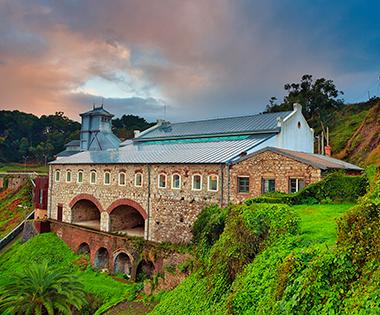
A journey through our industrial history
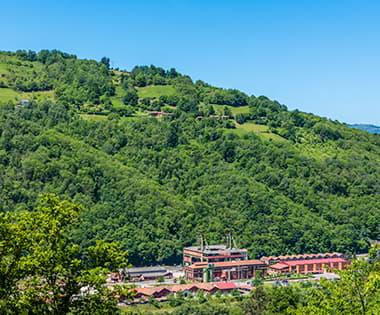
Industrial sites are a very representative part of the history and customs of Asturias. Some of its old mines are now museums that place the visitor in the life of the Asturians who worked in the mine.
This is the case of the Arnao Mine Museum, located in Castrillón, whose wooden and zinc-clad derrick has been declared an Asset of Cultural Interest. And it is not the only one. The Bustiello Village, also declared an Asset of Cultural Interest, preserves an exceptional urban and architectural work, a village that was built to be the home of the mine workers and their families. Do you want to know more? Discover here all the museums of the industrial history of Asturias.
Read more
Asturian Culture: Corners that exude tradition
The cultural heritage of Asturias is as extensive as the large number of cultural centres and monuments scattered throughout the region. From the mark left by our ancestors in the origins of humanity to the most modern and avant-garde artistic manifestations.
And not forgetting the outstanding Pre-Romanesque Art preserved in the region. With works from the 8th to 10th centuries, some of which have been declared World Heritage Sites by UNESCO, they form the most relevant and complete group of early medieval architecture in Western Europe.
There is a wide range of options for designing all kinds of cultural itineraries with the representation of different disciplines, periods and cultures. Here we show you some of the routes to discover the works of art and architectural gems that have forged the region's legacy.
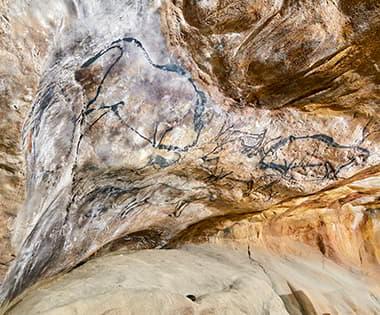
Cave art: a journey to the origins
With more than fifteen caves with engravings more than 35,000 years old, Asturias is a true paradise for cave art. Touring some of these caves or visiting museums dedicated to prehistoric art is a fascinating and educational way to transform a business trip into an experience that connects with our origins.
The day can begin at the Tito Bustillo Cave, in Ribadesella/Ribeseya, one of the most important cave complexes of the European Palaeolithic. The tour can culminate at the Prehistoric Park in Teverga, where faithful reproductions of Palaeolithic artistic techniques are on display, offering a complete immersion in the artistic legacy of our ancestors. Discover all the cave paintings you can visit in Asturias.
Read more
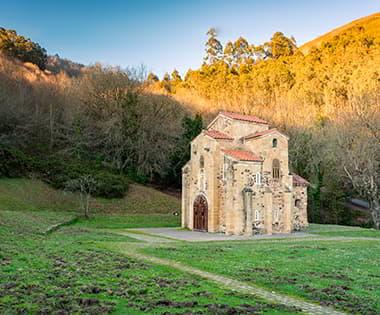
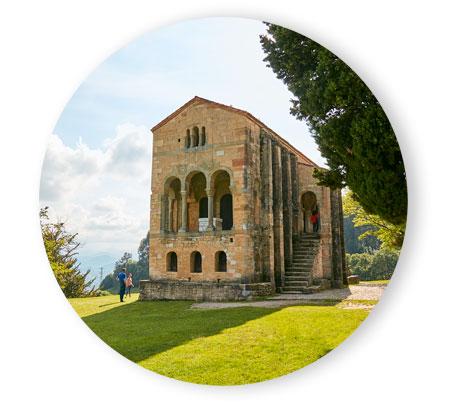
Pre-Romanesque, cultural emblem of Asturias
Art takes you back in time, reflects the feelings of a people at a particular moment in their history and says a lot about a place and its people.
Asturian Art or Pre-Romanesque Art is a treasure trove of works dating from between the 8th and 10th centuries that bear witness to the development of the Kingdom of Asturias. Santa María del Naranco, Santa Cristina de Lena, San Miguel de Lillo or the Church of San Pedro del Nora are some of these monuments. What do you think about including these jewels of heritage in your incentive trip? You can take a route around all of them or enjoy the most representative ones. A real spectacle for art lovers.
Read more
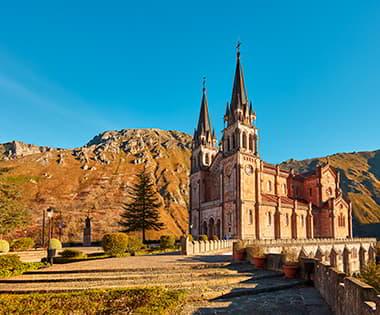
Cuadonga/Covadonga, the most visited monument in the region
Would you like to discover the place where history and legend intertwine in the origin of the first peninsular kingdom? Cuadonga/Covadonga is much more than a historical site, it is a place charged with spirituality, where every corner of the Royal Site, the imposing Picos de Europa and its iconic lakes seem to whisper ancestral tales. Its beauty and diversity, carefully preserved over the centuries, allow us today to enjoy a landscape that is practically untouched.
A visit to this place is almost obligatory for those who come to Asturias, not only for its stunning surroundings, but also for its historical and cultural importance. Moreover, this enclave was the first National Park in Spain and one of the pioneers in Europe, consolidating its importance as an authentic natural and heritage treasure. Take note of this visit to make your incentive trip even more special.
Read more